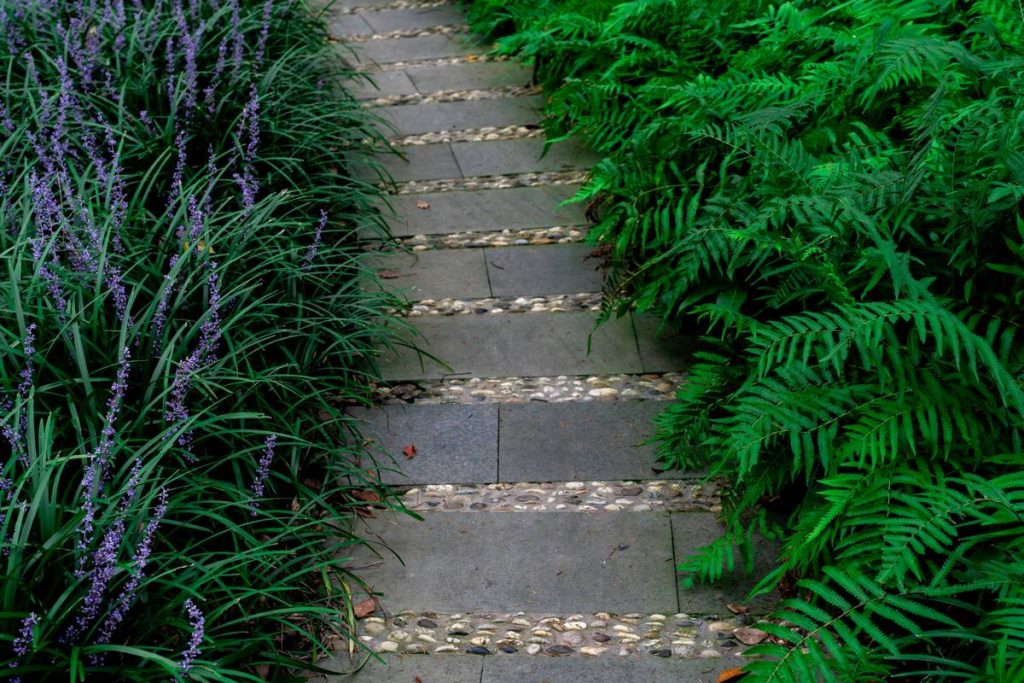
Ever spent an entire weekend laying stepping stones only to realize your wheelbarrow won’t fit—and now you’re lugging compost in buckets like a medieval serf? Yeah, we’ve been there. The width of a garden path seems trivial… until it ruins your flow, your back, or your aesthetic.
In this post, you’ll learn exactly how wide your garden path should be based on real-world function, design psychology, and decades of landscape architecture principles. We’ll break down:
- Why most DIYers get path width totally wrong (and how to avoid it)
- The golden ratios for foot traffic vs. carts vs. wheelchairs
- A brutal “terrible tip” that’s probably floating around Pinterest right now
- Real case studies from my own backyard fails (yes, I once built a path so narrow my dog side-eyed me)
Table of Contents
- Why Path Width Matters More Than You Think
- How to Choose the Perfect Width of a Garden Path
- 7 Best Practices That Actually Work
- Real Garden Path Examples (With Measurements!)
- FAQs About Garden Path Width
Key Takeaways
- Primary paths should be **at least 36 inches** wide for comfortable two-person walking.
- Secondary paths can be **18–24 inches**, but never under 15″ unless purely decorative.
- For wheelbarrows or garden carts, aim for **42–48 inches** minimum.
- ADA-compliant paths require **36 inches clear width**—not just nice, but legally smart if you host public tours.
- Visual perception tricks (like edge contrast) can make narrow paths feel wider.
Why Path Width Matters More Than You Think
You wouldn’t build a hallway in your house that’s 12 inches wide. So why treat your garden—a living, breathing extension of your home—with less respect?
The truth is, path width directly impacts usability, safety, maintenance, and even resale value. A too-narrow path forces awkward shuffling, damages adjacent plants from constant brushing, and turns simple tasks like mowing into obstacle courses. On the flip side, overly wide paths eat up precious planting space and can feel cavernous in small yards.
I learned this the hard way after building a “charming” 16-inch gravel path through my herb garden. It looked dreamy on Instagram—but within weeks, I’d worn bald patches in the lawn beside it because I kept stepping off to avoid shoulder-slamming rosemary bushes. My knees still ache thinking about it.

Credible sources back this up: the American Society of Landscape Architects recommends minimum clear widths of 36″ for primary circulation, while the Americans with Disabilities Act (ADA) mandates 36″ for accessible routes—including residential gardens used for events or rentals.
How to Choose the Perfect Width of a Garden Path
What’s the main purpose of your path?
Before you buy a single paver, ask: Who will walk here—and what will they carry?
Optimist You: “This path leads to my Zen meditation bench!”
Grumpy You: “Great. Now I have to haul mulch past your ‘Zen’ zone every spring.”
Be brutally honest about usage. Here’s a field-tested breakdown:
- Main access route (to shed, back gate, etc.): 36–48 inches
- Secondary garden loop (around flower beds): 18–24 inches
- Decorative stepping-stone trail (purely visual): 12–15 inches (but keep it short!)
- Wheelbarrow or cart access: Minimum 42 inches—better yet, 48″
Consider your body—and your guests’
In 2023, the average adult shoulder width is ~19 inches (CDC data). Two people walking side-by-side need ~40 inches—plus wiggle room. If your path is only 30″, you’re forcing awkward dance moves worthy of a rom-com meet-cute (but not in a good way).
Factor in turning radius for tools
I once watched a client try to turn a standard wheelbarrow (which has a 30-inch turning radius) on a 32-inch path. Spoiler: it ended with crushed lavender and tears. Don’t be that person.
7 Best Practices That Actually Work
- Measure twice, dig once: Use a garden hose or rope to lay out your proposed path. Walk it with arms full (pretend you’re carrying seedlings). Does it feel cramped? Widen it before breaking ground.
- Add 2–4 inches for edging: Pavers or borders eat into usable width. A “36-inch” path with 4-inch brick edging is really only 28 inches clear.
- Use visual tricks: Light-colored materials (like cream gravel) with dark borders make paths appear wider. Diagonal paver patterns also stretch perceived space.
- Slope matters too: On inclines over 5%, add 6 extra inches of width for stability—nobody wants a gravity-assisted tumble.
- Future-proof it: Planning a greenhouse or pond later? Run your widest path now. Retrofitting is 3x more expensive.
- Mind the vegetation: Shrubs that grow 24” wide on each side will choke a 36″ path into a green tunnel. Plant low or far back.
- Check local codes: Some HOAs or historic districts mandate minimum path widths—especially near sidewalks.
🚨 Terrible Tip Alert 🚨
“Just follow the width of your lawnmower!” Nope. Most mowers are 21–22 inches wide—but you need clearance on BOTH sides to avoid scalping edges. This “hack” creates razor-thin death traps. Don’t do it.
Real Garden Path Examples (With Measurements!)
Case Study 1: The Over-Engineered Fail
My first garden redesign featured a 60-inch bluestone path leading to a tiny bird bath. It looked regal… until weeds colonized the unused outer edges, making it look abandoned. Lesson: match width to actual use, not ego.
Case Study 2: The Tiny Urban Oasis Win
A Brooklyn client had a 10’ x 12’ courtyard. We installed a 22-inch curved decomposed granite path with 6-inch cobble edging. By keeping plantings tight and using vertical trellises, it felt expansive—not claustrophobic. Bonus: it cost $220 total.
Case Study 3: The ADA-Compliant Demo Garden
For a community garden I consulted on, we built all primary paths at 42 inches with gentle 2% slopes. Visitor feedback? “Finally, a place where my walker doesn’t get stuck.” Accessibility isn’t optional—it’s thoughtful design.
FAQs About Garden Path Width
Can a garden path be too wide?
Absolutely. Paths over 5 feet can disrupt garden intimacy and waste space better used for planting—unless it’s a central promenade in a large estate.
What’s the minimum width for a wheelchair-accessible garden path?
The ADA requires a clear width of 36 inches. But add 2–4 inches buffer for handrails or plant encroachment.
Does path material affect ideal width?
Indirectly. Gravel paths need wider bases (add 4–6 inches) to prevent spillover. Stepping stones can be narrower since feet land precisely.
How wide should a path be between raised beds?
At least 24 inches if you kneel to garden. For standing work or carts, bump to 36 inches.
Conclusion
The perfect width of a garden path isn’t a number pulled from thin air—it’s a balance of function, flow, and foresight. Measure your needs, not your neighbor’s Pinterest board. Prioritize comfort over cuteness, and always leave room for growth (yours and your plants’).
Now go forth: lay paths that invite strolls, not sighs.
Like a Tamagotchi, your garden path needs daily care—except instead of pixels, it’s powered by compost and common sense.
Rain on stone,
Path whispers wide enough—
I breathe deep.