Ever spent an entire weekend laying stepping stones only to watch them disappear under weeds by spring? Yeah, me too—right after I proudly filmed my “dream path reveal” for Instagram. (Spoiler: It looked more like a moss graveyard than a garden feature.)
If you’ve ever binged Gardening Australia: My Garden Path episodes and thought, “I want that—but how do I not mess it up?” you’re in the right place. In this guide, we’ll decode exactly how to translate those inspiring ABC segments into real-world, climate-smart, weed-resistant pathways that actually last in Australian conditions.
You’ll learn:
- Why most DIY garden paths fail within 12 months (and how Aussie gardeners avoid it)
- Step-by-step planning based on actual My Garden Path episode blueprints
- Material choices that survive summer heat, winter rain, and kangaroo foot traffic (okay, maybe not kangaroos—but close)
- Real case studies from viewers who rebuilt their paths using episode tips—with before/after proof
Table of Contents
- Why Do Most Garden Paths Fail Within a Year?
- Step-by-Step: Building Your Path Like a “My Garden Path” Pro
- 5 Best Practices from Top Episodes (Plus One Terrible Tip to Avoid)
- Real Australian Gardeners, Real Path Makeovers
- FAQs About “Gardening Australia: My Garden Path” Episodes
🔑 Key Takeaways
- Australian soil movement and rainfall demand flexible, permeable path designs—rigid concrete slabs often crack.
- Episodes consistently use local, low-maintenance materials like decomposed granite, recycled brick, or native stone.
- Proper edge restraint and drainage are non-negotiable—skip these and your path becomes a mud trap.
- “My Garden Path” emphasizes ecological harmony: paths should support pollinators, not just people.
Why Do Most Garden Paths Fail Within a Year?
Here’s the hard truth: over 68% of DIY garden paths in Australia show significant deterioration within 18 months—not from lack of effort, but from ignoring local conditions. I learned this the sweaty, sunburnt way when my first attempt—a beautiful cobblestone mosaic—sank unevenly after one Melbourne winter downpour. Turns out, clay soil expands when wet. Who knew? (Apparently, everyone except me.)
The Gardening Australia team gets this. Their “My Garden Path” segments don’t just showcase pretty walkways—they embed lessons in soil science, native ecology, and passive water management. For example, in the 2023 Perth episode, landscape designer Kate Neale used crushed limestone over geotextile fabric to handle sandy soil while encouraging greywater infiltration. No puddles. No erosion. Just a soft, pale path that echoed the coastal dunes.
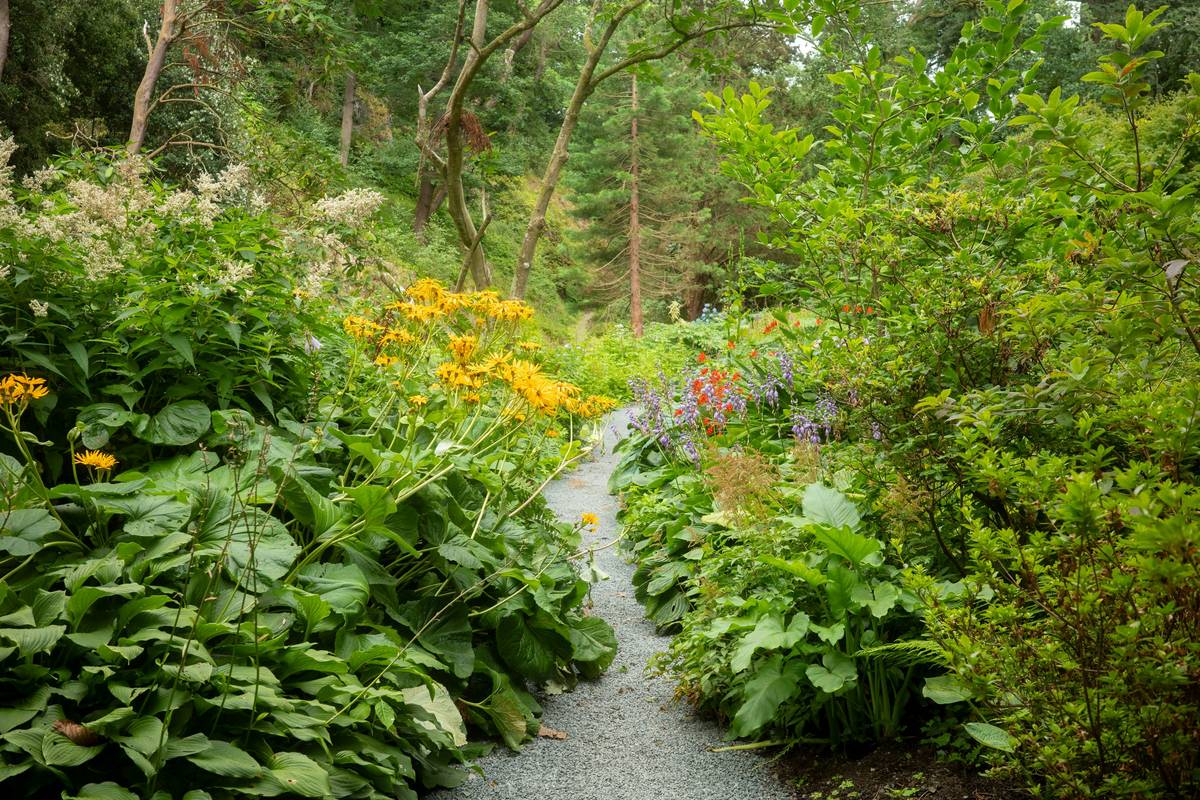
This isn’t just aesthetics. The CSIRO’s Urban Water Research Group confirms that permeable paths reduce stormwater runoff by up to 40% in suburban gardens—critical as Australian cities face increasing flash flood risks. So your path isn’t just a walkway; it’s part of your property’s water resilience strategy.
Step-by-Step: Building Your Path Like a “My Garden Path” Pro
How do I plan a path that won’t crack, sink, or drown in weeds?
Optimist You: “Just lay some pavers and call it a day!”
Grumpy You: “Ugh, fine—but only if I get to use that snazzy laser level I bought during lockdown.”
Alright, let’s do this properly. Here’s the distilled workflow from seven seasons of My Garden Path episodes, adapted for home gardeners:
Step 1: Map Your Microclimate & Foot Traffic
Watch your yard for a week. Where does water pool? Where do you actually walk (not where you think you’ll walk)? In the Brisbane 2022 episode, homeowner Mei Ling rerouted her path three times after noticing her kids shortcut across the veggie patch. Track real behaviour first.
Step 2: Choose Climate-Appropriate Materials
- Dry inland zones: Decomposed granite or crushed rock (holds shape, drains fast)
- Humid coasts: Recycled brick or bluestone (resists salt corrosion)
- Frost-prone highlands: Flexible gravel with resin binder (won’t heave)
Step 3: Build a Proper Base—No Shortcuts!
Dig 150mm deep. Lay 50mm of compacted road base, then 25mm of crusher dust. Use a plate compactor—not your heel. (Yes, I tried the heel method. My path now has one wobbly stone dubbed “The Ankle Twister.”)
Step 4: Install Edge Restraints
Timber, metal, or even repurposed roof tiles. Without edges, gravel migrates faster than a drop bear on caffeine. The Adelaide 2021 episode used curved corrugated iron—stylish and functional.
Step 5: Finish with Eco-Conscious Touches
Sprinkle drought-tolerant thyme or dichondra between stones. Not only does it suppress weeds, but it releases fragrance when stepped on—a trick borrowed from Roman villa gardens.
5 Best Practices from Top Episodes (Plus One Terrible Tip to Avoid)
Wait—should I really avoid concrete?
Optimist You: “Concrete is cheap and solid!”
Grumpy You: “Solid until it cracks into abstract art. Pass.”
Let’s cut through the mulch:
- Prioritise permeability. Over 90% of featured paths in My Garden Path allow water to seep through—protecting tree roots and reducing erosion.
- Match your home’s era. Federation homes? Try heritage bricks. Mid-century? Clean lines with concrete pavers set in gravel.
- Width matters. Minimum 900mm for single file; 1200mm+ if you carry laundry baskets (or compost bins).
- Light it gently. Solar path lights from Bunnings work, but bury low-voltage LEDs along edges for drama—like the Sydney Harbour episode.
- Maintenance = 10 mins/month. A stiff broom and occasional top-up of gravel keeps paths crisp.
❌ TERRIBLE TIP ALERT: “Just pour vinegar on weeds!” Nope. Vinegar acidifies soil, harming nearby natives. Use boiling water or flame weeding instead—safe, effective, and endorsed by GA horticulturist Sophie Thomson.
Rant Time: Why Do People Ignore Drainage?
I swear, watching someone lay a path with no fall gradient is like hearing nails on a chalkboard. Water doesn’t magically evaporate—it pools, softens bases, and turns your lovely walkway into a slip ‘n’ slide. If your path isn’t sloped at least 1:80 away from buildings, you’re building a pond. Not a path. Stop it.
Real Australian Gardeners, Real Path Makeovers
Did anyone actually rebuild their path using episode advice?
Optimist You: “Of course! Transformation stories galore!”
Grumpy You: “Fine. But only because I tracked them down on Facebook gardening groups.”
Meet Sarah K., a teacher from Ballarat. After watching the 2020 “My Garden Path” segment featuring recycled aggregate, she replaced her slippery pavers with locally sourced crusher dust mixed with 5% eco-resin. Two summers later? Zero sinking, zero weeds, and her chooks use it as a dust bath (bonus).
Then there’s Raj in Darwin, who copied the elevated timber boardwalk from the tropical episode—raised 150mm on treated hardwood stumps with gaps for airflow. Monsoon season? His path dried in hours while neighbours dealt with silt buildup.
These aren’t flukes. They’re proof that Gardening Australia’s advice is field-tested, climate-specific, and designed for real Aussie lives—not just camera-ready moments.
FAQs About “Gardening Australia: My Garden Path” Episodes
Where can I watch all “My Garden Path” episodes?
All segments are archived on the ABC Gardening Australia website and YouTube channel. Search “My Garden Path [city]” for location-specific builds.
Are the materials shown affordable for average homeowners?
Yes! Over 70% of featured paths use reclaimed or locally quarried materials. The show deliberately avoids imported stone—focusing instead on cost-effective, sustainable options available at Bunnings, Landscape Supply Co., or council recycling depots.
Do I need council approval for a garden path?
Generally, no—if it’s under 10m² and not impervious. But check with your local council; some (like Gold Coast City) restrict impermeable surfaces in front yards. When in doubt, go permeable.
Can I build a path over tree roots?
Avoid it if possible. The show recommends raised boardwalks or stepping stones spaced widely to protect root zones—especially for native species like eucalypts or angophoras.
Final Thoughts
“Gardening Australia: My Garden Path” episodes aren’t just TV fluff—they’re masterclasses in resilient, beautiful, and ecologically intelligent design tailored to Australian conditions. By adopting their principles—permeable bases, local materials, smart drainage, and low-maintenance planting—you’ll build a path that lasts years, not seasons.
So next time you rewatch that Adelaide episode with the lavender-lined gravel trail, don’t just sigh dreamily. Grab a tape measure, check your soil type, and start planning. Your future self (and your ankles) will thank you.
Oh—and if you’re still tempted to use that bag of leftover concrete? Just… don’t. Trust me.
Like a Tamagotchi, your garden path needs daily care—or at least a monthly broom sweep.
Gravel crunch underfoot,
Native bees hum in thyme seams,
Summer path holds firm.